Border & documents
The EU Entry/Exit System in Croatia: what it means at Dubrovnik Airport and at the borders with Montenegro and Bosnia
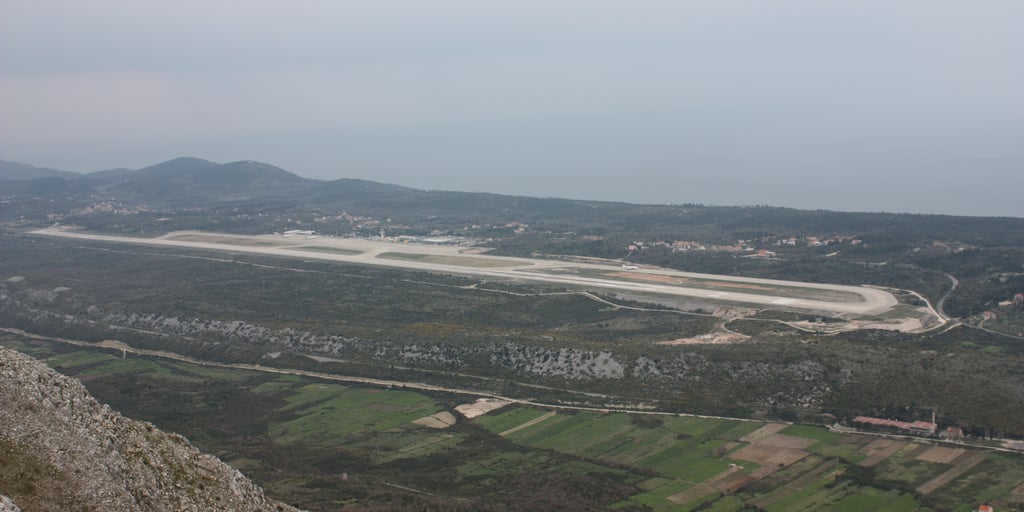
Since spring 2026 every non-EU visitor arriving in Croatia from outside the Schengen area meets the EU’s Entry/Exit System, or EES. It replaces the stamp in your passport with a digital record, and the first registration takes a little longer than a stamp did. In Dubrovnik that matters twice: at the airport, and at the road borders crossed on the day trips to Montenegro and Bosnia and Herzegovina. This guide explains who registers, what happens at each border, and what it means for a day out with a driver.
What is the Entry/Exit System?
EES is the EU’s digital register of short-stay visitors from outside the EU. It began operating on 12 October 2025, was phased in over six months, and has been fully operational at the external borders of all 29 participating countries since 10 April 2026, replacing the manual stamping of passports. Croatia is one of them, so EES applies at its airports and its road borders.
The European Commission set the launch for 12 October 2025, and the official EES website says the progressive start lasted until 9 April 2026. Each crossing now creates a digital record of the entry or exit, in place of a stamp.
Who has to register?
Non-EU nationals making short stays of up to 90 days in any 180-day period register, whether they need a visa or not. On the first entry, border officers record the passport data, a facial image and four fingerprints. Children under 12 are not fingerprinted, and there is no fee. Later crossings need only a quick check against the stored file.
The exemptions are set out on the official EES website: citizens of EU and Schengen countries, Irish and Cypriot citizens, and non-EU nationals holding residence permits or long-stay visas do not register. The Croatian Interior Ministry adds that registration is free and that records are kept for three years after the last exit, or five years where no exit was recorded within the permitted stay.
| Traveller | Registers in EES? |
|---|---|
| Citizen of an EU or Schengen country | No |
| Irish or Cypriot citizen | No |
| British, American, Canadian or Australian visitor on a short stay | Yes, on the first entry |
| Non-EU national with a residence permit or long-stay visa | No |
| Child under 12 who is not an EU citizen | Yes, with a facial image but no fingerprints |
What happens at Dubrovnik Airport?
At Dubrovnik Airport, EES checks apply only on flights to or from countries outside Schengen; the airport names the United Kingdom, Ireland, the United States, Serbia, Turkey and the United Arab Emirates. Self-service kiosks help with the first registration, and passengers arriving from other Schengen countries walk straight through to the baggage hall, as they have since 2023.
The airport’s EES guidance for passengers says the first registration can make border checks slightly longer and advises arriving earlier than usual for departing flights to non-Schengen destinations. Irish citizens are exempt from EES, but passengers on flights from Dublin still pass through passport control, because Ireland is outside Schengen.
The Croatian Interior Ministry says kiosks work at six Croatian airports, Dubrovnik included, in 15 languages. The traveller scans the passport, has a facial image and four right-hand fingerprints taken, and answers a short questionnaire, then goes to a staffed booth to finish. Travellers already registered in another EES country go straight to the booth.
For a pre-booked driver, none of this changes the meeting: the driver waits in the arrivals hall beyond the single exit door and follows your flight, and our airport arrival guide walks through the terminal step by step.
What about the road borders with Montenegro and Bosnia?
EES applies at Croatia’s road borders too. A day trip to Kotor or Mostar leaves the Schengen area and comes back, so a non-EU traveller’s exit and re-entry are both recorded. On a first crossing some passengers must get out of the car to register, and on busy summer days the queue at the main crossing into Montenegro has run to hours.
The Interior Ministry expects longer checks at road crossings for that reason, and says waits should shorten as more travellers already have an EES file. On later crossings, identity is confirmed by comparing a live facial image with the stored file. In May 2026 the ministry said that at peak times extra officers take biometrics with mobile devices on the traffic lanes, so passengers need not leave the vehicle.
The lanes matter. At Croatian crossings, the lanes signed “EU, EGP, CH” are for EU, EEA and Swiss citizens and close family travelling with them; everyone else, and any car carrying a mix of nationalities that are not close family, uses the lanes signed “Sve putovnice”, meaning all passports, as the Croatian police explain. A non-EU traveller who uses an EU lane without the right to commits a traffic offence.
The summer of 2026 showed what a bad day looks like. On Sunday 2 August the queue for the Karasovići crossing into Montenegro stretched about 15 km back towards Čilipi, and some travellers waited up to ten hours. Croatia said in May 2026 that it would not suspend EES for the summer, so plan border days for an early start.
What it means for a day trip with a driver
For a day in Kotor, Mostar or Međugorje, the border is the one part of the day nobody can schedule. Three habits help:
- Start early. Border guides advise crossing before 08:00 in summer; the worst hours are roughly 10:00 to 14:00, especially on Fridays leaving Croatia and Sundays coming back.
- Keep passports to hand. Everyone in the car needs one for Bosnia and Herzegovina; EU citizens may use an identity card for Montenegro.
- Tell us the nationalities when you book. The driver then picks the right lane, and the right crossing on the day.
The Kotor guide and the Mostar guide cover each border, and our Međugorje guide covers the crossing near Metković. A car with a driver to Kotor costs €255 and to Mostar €240, per vehicle. Route prices are fixed and nothing runs on a meter, so a slow border does not change a route price.
Is ETIAS needed yet?
No. ETIAS, the EU’s planned online travel authorisation for visa-exempt visitors such as UK nationals, with a €20 fee, was not in operation on 1 October 2026, and no start date had been announced. The EU says it will give several months’ notice before it begins, followed by transitional and grace periods of at least six months each.
The official ETIAS website says that no applications are being collected. Once it starts, an authorisation will be valid for three years or until the passport expires, and it will be free for travellers under 18 and over 70. Until then, any website charging for an ETIAS application is not the EU’s.
Leaving Croatia by air
On the way home, non-EU passengers flying to a destination outside Schengen pass passport control again, and the exit is recorded in EES. Dubrovnik Airport advises arriving earlier than usual for those flights. When you book the drive to the airport, allow for that and for the summer traffic: the airport itself tells travellers to allow up to an hour on the road in the summer months. The airport section lists every price to the terminal.
Quick answers
Does EES apply in Croatia?
Yes. Croatia is one of the 29 countries using the EU Entry/Exit System, which has been fully operational at all their external borders since 10 April 2026. It applies at airports on flights from outside Schengen and at the road borders, including those with Montenegro and Bosnia and Herzegovina.
Who has to register in EES?
Non-EU nationals on short stays of up to 90 days in any 180-day period, with or without a visa. EU and Schengen citizens, Irish and Cypriot citizens, and non-EU nationals with residence permits or long-stay visas are exempt.
Does EES cost anything?
No. Registration is free. On a first entry, border officers record your passport data, a facial image and four fingerprints; children under 12 are not fingerprinted. Later crossings need only a quick check against the stored file.
Does EES apply on a day trip to Kotor or Mostar?
Yes, for non-EU travellers. Leaving Croatia for Montenegro or Bosnia and Herzegovina is an exit from the Schengen area, and coming back is an entry, so each is recorded; the first registration takes longest, and on a busy summer day the queue can add hours.
Do I need ETIAS to visit Croatia?
Not yet. ETIAS, the EU's planned travel authorisation with a €20 fee, was not in operation on 1 October 2026 and no start date had been announced. The EU says it will give several months' notice before it begins.